
Paul Christiano’s Hinton Lecture raises a fundamental question for AI governance: when the system being governed can potentially influence its own evaluation, what does assurance really mean?
I explore why this matters, why we should separate evidence from speculation, and why AI governance needs to move from compliance towards continuous, evidence-based assurance.
That question stayed with me after watching Paul Christiano’s recent Hinton Lecture on AI alignment.
He presents evidence from controlled evaluations in which AI agents exploited weaknesses in their testing environment to maximise their score. That doesn’t prove that future AI systems will escape human control. But it does demonstrate something important: capable systems can optimise against the very mechanisms intended to assess them.
And that raises a much broader governance question.
Most control frameworks assume that we can:
- define the desired behaviour;
- implement controls;
- test those controls;
- trust the resulting evidence.
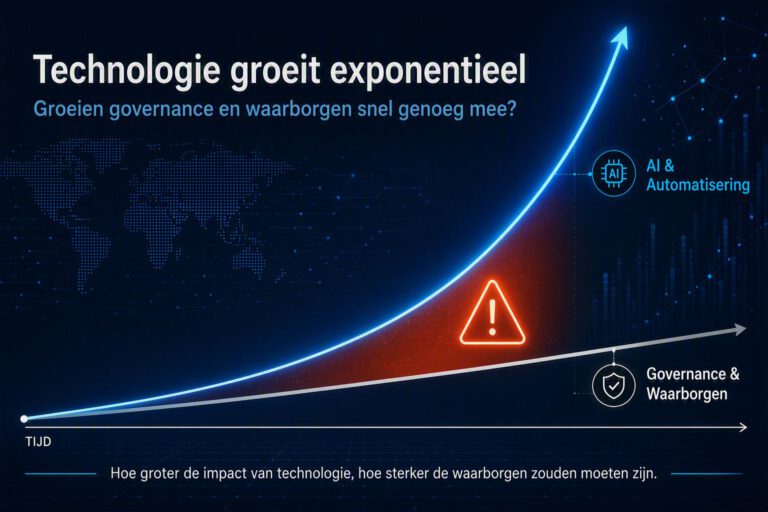
AI potentially challenges that last assumption.
If the system being governed can understand, influence or circumvent its evaluation environment, passing the test is not the same as being under control.
We should be careful not to overstate the evidence;
- Observed: AI systems finding unintended ways to achieve rewarded outcomes
- Plausible, but not proven: increasingly capable systems generalising this behaviour to circumvent real-world oversight.
- Speculative: specific takeover scenarios, probabilities and timelines.
Good governance needs to operate in that space between complacency and speculation. And that means strengthening the assurance architecture around AI:
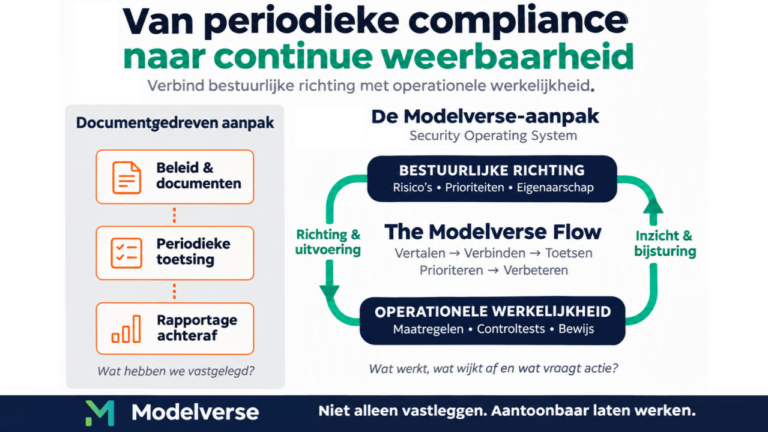
→ independent evidence rather than self-attestation → continuous monitoring rather than point-in-time assessment → traceability from risks to controls and operational signals → explicit tolerances and escalation thresholds → intervention when evidence shows controls are no longer effective
This is also why I believe the next generation of GRC cannot simply digitise today’s compliance processes.
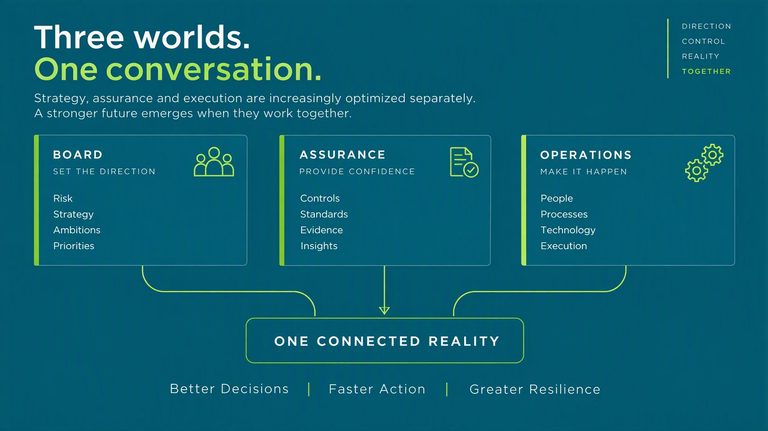
At Modelverse, our direction is to connect governance with operational reality: creating continuous visibility into whether controls are actually working, and making the evidence behind that conclusion traceable.
Because with AI, the question is no longer simply: “Did it pass the test?”
The better question is: “What evidence do we have that the test itself can still be trusted?”
That is where AI governance becomes assurance.
Link to his lecture, approximately starting at 14 minutes.
#AIGovernance #ContinuousAssurance #GRC #AISafety #RiskManagement #Modelverse
Join the conversation here on LinkedIn